
Technology mogul Elon Musk once tweeted out that “people are overrated.” While he would later explain that he was referring...
Read More

The System Components of Leadership
Leadership effectiveness has three key components - not competencies - but system components - the necessary and sufficient conditions to...
Read More

The Intrinsic Nature of Leadership
There are basically four fundamental aspects of behaviour style: (1) executing (driver), (2) influencing (persuader), (3) strategic thinking (analyzer), and...
Read More
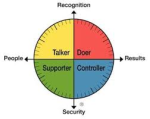
What’s Your Leadership Style
There are essentially four behaviour preferences or styles: (1) executing (driver), (2) influencing (persuader), (3) strategic thinking (analyzer), and (4)...
Read More

Domains of Leadership Strength
John Maynard Keyes wrote, “The hardest thing is not to get people to accept new ideas; it is to get...
Read More

The Role of Performance Coach
As a leader one of your most important roles is Performance Coach. And by far, behaviour change is THE most...
Read More
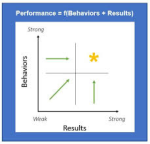
The Driving Force behind Behaviour
A fundamental principle, what one might call a natural law, is that people choose to act and behave based on...
Read More

A Leaders Playbook
Throughout the college football season, we can glean many valuable leadership behaviour lessons that are so applicable to the work...
Read More

Connecting Behaviour to Performance
The belief that a leader’s behaviour is the key predictor to organizational performance is a radical shift in leadership thinking....
Read More

The Secret to Leadership Development
If you are a senior leader, you have to ask yourself, how committed am I to real change in my...
Read More

The Three Reasons Leadership Development Fails
Go online, stroll through a bookstore, attend another training workshop or seminar and you will see that the topic of...
Read More

Inspiring Others to Embrace Change
One of the key characteristics of influential leaders is their ability to stimulate volition in themselves and among their followers....
Read More

Say No to the Status Quo
Influential leaders almost always are highly dissatisfied with ‘status quo’. They are unwilling to allow preventable pain and suffering to...
Read More

The Biology of Change
What makes people, who possess knowledge about what they need to do to actually improve their performance, alter and change...
Read More

Are Your Connections Positive or Negative?
Relationships, by their nature, require constant and consistent tending. The quality of care you put into these relationships translates into...
Read More

Making the People Connection
The greatest of all leaders understand that methods, tools, technologies, protocols, and systems do not achieve results. People do. Therefore,...
Read More

A Culture Built For Performance
People do not quit their jobs. They quit their leader – the boss. Ineffective leaders breed ineffective followers, and performance...
Read More

The Principle of Followership
In today’s professional world, people are craving effective leadership. What maybe misattributed as generational gaps is that everywhere, middle level...
Read More

How Leaders Create Culture
The ancient Greek aphorism, “Know Thyself,” can be attributed most notably to the philosopher Socrates, however, for the more modern...
Read More

Crossing the Age-Gap
An analysis of 20 studies with nearly 20,000 people revealed slight and inconsistent differences in job attitudes when comparing generational...
Read More