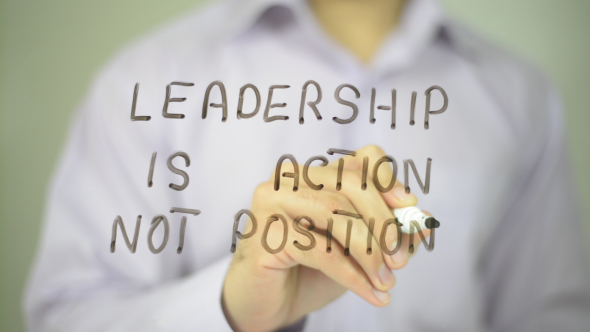
Why Workplace Behaviour Is a Big Deal

The Skill of Positive Presence is your natural ability to adjust for and create a positive and energized mindset within yourself through conscious thought processes.

Our proficiency for Positive Presence is different for each of us …. greatly dependent on our life experiences, on our beliefs, and on the paradigm within which we live. For many of us, our thought patterns are automatic and we give them little notice …. but if we want to give them notice, and if we consciously practice how we think, our brain will re-wire for that, and the new process becomes automatic again (unconscious, if you will…)… in really no time at all!

We all know the human form is a complex chemical manufacturing plant for energy – neuro-chemical electro-magnetic energy, to be exact. Relatively recent research in the neurosciences has shown there is this continuous looping and re-looping of energy both positive and negative, between our two dominant human energy fields — the heart and the brain.

It is this looping and re-looping of energy that makes each of us a unique individual. Joseph Chilton Pearce, in his book “The Heart-Mind Matrix” refers to studies showing that when our energy is positive we are experiencing positive thoughts and feelings such as kindness, happiness, optimism and love….and on the flip side when thoughts and/or feelings are negative (like, anger, frustration, jealousy, and cynicism) … our energy is also negative. Pearce also explains linkage between positive energy (positive thoughts and feelings) and an increased ability to ‘connect’ and ‘mesh’ with others …. an increased ability to work together, if you will. So it takes a positive energy flow for people to be tuned into one another and to work together collaboratively.

Evidence is coming forth suggesting too, that a person’s negativity not only diminishes the benefits of someone else’s positive flow … it can counteract it altogether. Our brain determines what we think, what we feel, what we say, and what we do. To ensure survival, our brain evolved a negativity bias, described by Dr. Rick Hanson in his book “Hardwiring Happiness”, as “making it like Velcro for bad experiences but Teflon for good ones.” The good news is — every one of us has the ability to re-wire (through the neuroplasticity of our brain) for positive thought habits … and even better – unlike most everything else as we age — our ability to do this, if we have a healthy mind, does not diminish with age!
So, when we are in a positive flow of energy …. It is then that we are able to really connect and mesh within our self, and with others. What’s more, the more time we spend in a positive flow, the greater our capacity for achieving peak performance, for building and maintaining good relationships, for experiencing good health.

With the enormous advances over the last decade in neuro-imaging technology (watching the electro-magnetic activity in our brain) …. research in the field of neuroscience has exploded. Neuroscientists looking at cognitive functioning and behavior have suggested, simply put:
• We can assess our personal energy flow through our feelings.
• Feelings such as happiness and optimism can be linked to a positive energy flow, and feelings such as anger and frustration can be linked to a negative energy flow
• We can change our feelings with our thoughts.
• It is through our thought process that we choose how to behave.
• And the bottom line is …. the measurable result of a person’s energy flow is reflected by one’s choice of behavior.

So it is that in order to develop a collaborative and productive workforce one of the key performance indicators will be workplace behaviour.

Tagged with: , , , , , , , , , , , , , ,
Posted in Uncategorized

Re-wiring for Wellness

In today’s work environment where people bring their mind and the expertise together for a common goal, and where virtual meetings and social distancing are the new normal, it is particularly critical that we take the time to figure out how we can come together, face to face, to acknowledge and clarify our purpose and our connection. This coming together, whether it’s around a desk, around a board room table, by way of a huddle or a video call, is crucial for success. It is this coming together that builds trust and enables us to truly appreciate our uniqueness and celebrate our differences, particularly in terms of speech, mannerisms and behaviour.

Our brain is an extremely powerful machine to which we hold the controls. Having ‘control’ requires a keen self-awareness into our emotional energy and our behavior and thought habits. It takes anywhere from 14 days to 8 weeks to ‘re-wire’ our brain for a higher skill level . We ‘re-wire’ by continuous reading, writing and reciting of information for creating new thought and behavior habits. This re-wiring occurs via the neuroplasticity of your brain. Tell yourself often, “A learning mind is a healthy mind.”

Research and personal experiences are telling us that this phenomenon of ‘re-wiring’ is very possible even with those people who have suffered a severe concussive brain injury. In fact, an entrepreneurial colleague of mine was completely disabled by an acquired brain injury however, with disciplined and deliberate exercises and techniques she was able to re-wire her damaged brain. She did this by using both traditional and non-traditional thought techniques and mind exercises as she systematically honed her skill of generating a positive emotional energy flow … allowing the neuroplasticity of her brain to ‘rewire’ as she consciously adjusted her thoughts … relieving her from her episodes of depression, psychoses, frustration, and anxiety . She altered her level of anxiety and frustration by consciously practicing a positive thought process; She became better able to focus for greater periods of time and started making informed decisions; And she became a generally happier and more optimistic person, with a clearer mind of what she needed to do to reach her goals.

The big take-away here is the realization that the practice of positive thought is a learned skill …. Many of us (in fact, most of us…me included) do not come ‘pre-wired’ for positive thoughts …. basically, our thought-habits are the product of our life experiences to date — and the skill of what we call “Positive Presence” becomes a matter of learning how to think and then practicing how to think.

Every one of us has the ability to re-wire through the neuroplasticity of our brain, and the fact that this ability does not diminish with age is a true gift of enlightenment. Furthermore, if it is possible to re-wire a brain damaged by concussion, just imagine the opportunity there is for re-wiring your healthy brain for thoughts and actions that bring wellness and success.

Tagged with: , , , , ,
Posted in Uncategorized

Positive Presence – a Necessary Skill for Today’s Workforce

Positive Presence is your natural ability to adjust and create a positive and energized mindset within yourself through conscious thought processes.

Your skill level for Positive Presence depends on many, many things, but mostly, it is developed through your life experiences to date, and your level of self-awareness, and to some extent, your genetics.
The field of Neuroscience is a relatively new area of scientific study that began to formally organize in the 1960’s. Since then, research coming forward about the workings of the human nervous system has exploded on a global scale, and most significantly, with the aid of neuro-imaging technology, brain research is advancing in leaps and bounds.

The findings coming forward from the neuro-sciences have huge implications for business organizations on a global scale. And in fact, these findings call for a gigantic shift in how the modern organization develops its employees, its leaders, and the overall organization, in order to succeed in today’s global knowledge-based economy.

In the knowledge-based economy it is the first time in human history that a ‘hard day’s work’ is not ‘hard’ in the physical sense, but instead it is the employee’s brain that’s being worked — it is their ‘mind,’ that is employed. That being said, for today’s organizations to succeed and thrive will depend on the ability of the collective working brain-power of their workforce to create and produce.

Research has proven that the ‘brain-power’ needed for productivity and efficiency today will only occur when we are in a state of positive emotional electro-magnetic neuro-chemical energy. In other words, the emotional state needed for productivity, efficiency, and wellness, is the same emotional state that we are in when we are joyous and happy. The research shows in fact, that the greatest risk to productivity, to work relationships, and to overall wellness in today’s workplace, is negative energy.

Building the skill of Positive Presence requires a focused self-awareness through which you learn to adjust and create a positive and energized mind set through conscious thought processes. The skill of Positive Presence is best learned through real-time on-the-job practice – as you develop a keener awareness of yourself, of others, of behavior habits, and most importantly, of human energy.

Tagged with: , , , , , , ,
Posted in Uncategorized

Leading from Your Upper Brain™

In December of 2018 my good friend and mentor, Dr. Michael Frisina, was published in the International Journal of Academic Medicine | Volume 4 | Issue 3 | September-December 2018. http://www.journalonweb.com/ijam As an licenced affiliate of The Frisina Group’s ‘Center for Influential Leadership’ I am honoured to present the following excerpt from his publication:

There is a revolution taking place exploding decade’s long false beliefs about individual and organizational performance related to the tension between the human performance brain and the human survival brain. This neuroscience revolution is fundamentally shifting learning and development strategies completely transforming what leaders need to be in a behavior‑centered approach to performance and the traditional technical skills they need to know to drive performance to the highest level. More than technical skill and intellect, individual leadership behavior is the singular most important predictor to a team’s performance. Sadly, very few leaders know that this dynamic exists or how to leverage leadership behavior to drive performance.

…“If you realized how powerful your thoughts are, you would never think a negative thought again.”
‑Peace Pilgrim.

What would you do if you discovered a way to turn on your brain and enable you to be happier, to be
more prosperous, and to achieve the goals you set for your life?

Based on the foundation of the latest neuroscience research on the brain, you can learn how thoughts impact your body, mind, and spirit. Based on your thinking patterns, you can promote positive and productive behaviors that lead to mental, emotional, physical, and spiritual health. Think poorly and you can alter the cell structure of your body, lower your immune system response, and become less healthy in mind, body, and spirit. What you are thinking every moment of every day becomes a physical reality in your brain and body that affects your optimal mental and physical health. Gaining the ability to think effectively, choose effectively, and behave effectively is the hallmark of all high achievers and life success regardless of a person’s chosen field of endeavor.

Understanding epigenetics, how the brain responds to physical stimuli of electromagnetic and chemical flow in the brain, triggers groups of genes to act in a positive or negative direction based on your reactions to life events. Events plus your response to events determine the outcomes of your life. Negative responses create negative outcomes, and positive responses drive more positive and optimal outcomes even in the most challenging of life circumstances.

…When you change your behavior, you change your life circumstances.”

…You are free to make choices about how you focus your attention, and this affects how the chemicals and proteins and wiring of your brain change and function. Neuroscientists are proving that the relationship between what you think and how you understand yourself and the world around you – your beliefs, dreams, hopes, and thoughts – has a huge impact on how your brain works and ultimately what you achieve in levels of performance excellence.

…The link to neuroscience and thought is that thoughts are real, physical things that occupy mental real estate. Moment by moment, every day, you are changing the structure of your brain through your thinking. When we are thinking positively, productively, and when we hope for something better, we alter the physical structure of our brains in a more positive, productive direction allowing our brains to function in the high capacity for which they are created. Rudolph Tanzi, PhD, says there are four roles you can learn and manage every day to take control of your thoughts so you take control of your life:
1. Lead your brain – you can give your brain‑specific orders every day
2. Reinvent your brain – create new neuropathways and connections inside your brain to become more productive and to achieve your goals
3. Teach your brain – train your brain into new habits and new skills
4. Use your brain – you are responsible for keeping your brain in good working order.

Your brain is the gateway to your future. Your brain cannot do for you what it thinks it cannot do. Primitive reactions to external threat stimuli (fear, anger, jealousy, and aggression) can overrule higher brain function necessary for higher‑order cognitive function (problem solving, critical thinking, teamwork, unit, clarity, and cohesion). Learning how to create a robust response capacity – mental resilience – you can learn to take control of your thinking and ultimately learn to take control of your destiny. ..

Tagged with: , , , , , , , ,
Posted in Uncategorized

The Hierarchy of Organization Behavioural Needs

In 1943 Abraham Maslow developed what many of us know as “Maslow’s hierarchy of needs.” His theory is that human psychology revolves around a five-tier model of human needs, often depicted as hierarchical levels within a pyramid.

As you may know, lower level needs in the hierarchy must be satisfied before individuals can attend to needs higher up. From the bottom of the hierarchy upwards, the needs are: physiological, safety, love and belonging, esteem and self-actualization. The truth is that in your organizations there exists a hierarchy of behavioural needs of your employees. Our research at The Frisina Group and The Center for Influential Leadership has identified that within all organizations employees want to be treated with respect by their leadership in behaviour that communicates physical and emotional safety. When leaders fulfill the fundamental needs for trust and safety, the brains of people are readily able to move from the security part of the brain physiologically to the performance part of the brain. This is brain biology not psychology. Once people are able to focus on work from their performance brain, they become more engaged and connect to the meaning and value of their work at higher levels of performance. The ability of a leader to communicate trust and safety to their team members creates an upward spiral of performance potential. The opposite of this brain biology fact is equally true. Create a toxic work culture — behave as a leader in ways that undermine the tenets of Maslow’s hierarchy of needs, and you do so at your own performance peril and the performance outcomes of your team.

So often we hear in leadership education that we are to “lead by example.” Too often this translates to leaders that if I want my employees to work as hard as I do, than that means I have to demonstrate it through my own initiative. Sadly this concept gets oversimplified. When leaders want employees to work longer hours, they think that they set that example by staying at work the longest. The reality is if you really want to impact your workforce and lead by example, start caring for the emotional and physical wellbeing of your people. Start appealing to the hierarchy of organizational behaviours that do exist in your workplace. Start respecting your people, start clearly and effectively communicating with your employees, and start demonstrating to them that their work is creating lasting meaning and has purpose.

If you want a robust and dynamic workplace that is achieving high marks in performance and excellence, then lead by example absolutely; start showing and demonstrating these behaviours to your people. People cannot proceed in the direction you want them to without clear guidance and communication. Likewise, who wants to work in an environment where individual efforts are diminished by leadership? What person, you included wants to invest more time and effort in work when both you, as a person, and your work are not valued or respected by leaders of the organization. To prove this point, think about how children express themselves when answering the question, “What do you want to be when you grow up?” Most often children identify nurses, fireman, paramedics, astronauts, doctors. They identify professions that demonstrate a sense of meaning and purpose. They demonstrate a value to others and of working to a purpose that exceeds their own individual desires.
People, regardless of their profession, want to know that what they are doing is providing value and a purpose to their lives and the lives of others. We may not be what we once wrote down in grade school, but regardless, as leaders, we ought to be doing everything in our ability to translate to our people that what they are doing in our workplaces is providing lasting meaning and purpose. It’s our job as leaders to lead by example, to ensure we are meeting and encouraging the behavioural needs of our people. We choose to lead or follow. In either choice, behaviour as a whole and communication specifically, becomes the fundamental factor in how we connect effectively with others. Highly effective relationships are essential for you to achieve your own sense of meaning and purpose. No one wins alone.

Communication remains a critical and vital element of effective organizational performance. Communication is vital to creating effective collaborations that will drive performance in the production, safety, quality, and financial indicators of the organization. You will never achieve effective collaborations without effective communication framed in a positive and energized manner. You will never achieve effective communication without honing the skill of Positive Presence — the ability to adjust and create a positive and energized mindset within our self through conscious thought processes.

Tagged with: , , , , , , , , ,
Posted in Uncategorized

Effective Communication is Paramount!

In April of this year, technology mogul Elon Musk tweeted out that “people are overrated.” While he would later explain that he was referring to the power of robotics and the emerging technology in both robotics and artificial intelligence, I can’t help but think of how destructive that nineteen-character tweet was to his organization? Musk worked diligently to surround himself with really bright and intelligent people that spend a considerable amount of time and energy on his research and engineering projects. Robotics maybe an emerging technology but people are not overrated. I learned long ago that words have meaning; your words as a leader have immense power. Words send a strong message to the people who work with and for you in your organization.

Here is a fundamental truth about organizational performance. The majority of people you know, yourself included, desire highly effective, functional relationships – personal, familial, and professional.
Here is the reality check. Few people are willing to do the hard work at the essential level to sustain and create those relationships. One of the key ways we, as leaders, can develop and maintain highly effective relationships, is to learn to communicate effectively with the people around us.

Communicating with other people is a life essential. Effective communication, as Simon Sinek might say, is a tribal instinct essential to appropriate bonding within a host of relationships. We communicate everyday—all day—with people in our workplaces, our friends, our families, and strangers in a host of communal locations. The point of this discussion is simple: to add meaning, value, and purpose to our lives, we need to be able to have effective communication with people in a variety of roles in our lives. Stephen R. Covey may have said it best in 7 Habits when he advised that we are to “seek to understand before we demand to be understood.”

History is replete with failure in execution in a host of examples from business, politics, health care, and the military related to ineffective, incomplete, and unclear communication. The reality is that your ability to communicate as leader is of critical importance. In a recent survey of recruiters from companies with more than 50,000 employees, communication skills were cited as the single most important decisive factor in choosing managers. The survey, conducted by the University of Pittsburgh’s Katz Business School, points out that communication skills, including written and oral presentations, as well as an ability to work with others, are the main factors contributing to job success. Once again we see that behaviour is a key contributing factor to performance excellence and communication is certainly a behaviour skill if nothing else.

We have all been taught that the key to communication is listening. This is true, but you first must care before you can listen to understand effectively. Effective communication, as a highly influential trust behaviour, requires caring first, and seeking to understand before demanding to be understood. An old adage is applicable here: I do not care in how much you know, until you demonstrate to me how much you care. Displaying behaviour of compassion to another person opens their brain up to a willingness to listen. When people make a decision to shut you out of their lives because of your behaviour, effective communication with those people ceases.

One of the downsides to the advancements in mobile technology is that people’s verbal skills are actually decreasing as a result of constant emailing and texting. Whatever the fundamental driver that inhibits and prohibits people from being able to communicate effectively, whether CEO or new hire in the mail room, such a refusal perpetuates ill will and wreaks havoc in workplace engagement, productivity, and performance.

When we begin to examine the nature of relationships in our organizations we can gain understanding as to the value and the power of being able express ourselves, our intentions, and our shared values to connect with peers and subordinates to drive engagement and peak organizational performance. None of that can occur until individual leaders are willing to put in the effort to effectively communicate with those around them. As leaders, we may think we have the best ideas, vision, and direction to take our organizations to higher levels of performance. But if we cannot effectively communicate that vision or direction, and if we do not manage how fast we try to communicate in a complex and chaotic work environment, we will be unable to translate those ideas from strategy to an operational reality. Remember, performance is as much about the people and their ability to execute a good plan as it is about the plan itself.

Learning to communicate effectively as leaders is all about becoming aware of the diversity of talent we have around us, and then engaging in methodical and consistent efforts to connect with people in a positive, emotional connection to create engagement of their talent. Doing so improves your effectiveness in key relationships, increases your level of leadership influence, and ultimately drives peak performance in your organization. A positive emotional connection begins with the skill of Positive Presence — a new and deliberate way of thinking and behaving that makes the connection between emotional energy and behaviour for effective communication.

Tagged with: , , , , , , , , , ,
Posted in Uncategorized

The Intrinsic Nature of Leadership

There are four fundamental aspects of behaviour patterns: (1) executing (driver), (2) influencing (persuader), (3) strategic thinking (analyzer), and (4) relationship building, (stabilizer). With a fundamental understanding of the four aspects of behaviour patterns and how they affect connection, collaboration, and engagement, we can examine their link to the intrinsic nature of leadership. Understanding this link is critical to understanding our fundamental role as leaders and the purpose to shaping driving performance in organizations.

1. The fundamental purpose of leadership is to produce results that guarantee the long-term sustainability of an enterprise or what we call an organization. Fact — All leaders must get results. If we are failing to achieve results we are not leading anyone.

2. The most critical factor that determines what makes for an enduring organization is the effectiveness of all its leaders – no one person can manage the complexity of change alone. It is the effectiveness of the collective leaders of an organization that truly differentiates high performing organizations from all the others.

3. Leadership effectiveness has three key components – not competencies – but system components – the necessary and sufficient conditions to produce results at a very high level sustainable over time. The three core components of leadership are:
a. Character – who you are on the inside – your Being and authentic Self;
b. Competence- your technical knowledge, skill, talent, and intellect; and
c. Commitment- your willingness to act and to execute faithfully on the strategic objectives of the organization to achieve the results that create long-term sustainability of the organization.

Character is the leverage to competence and commitment to serve the long-term interests of the organization. This is why individual leader behaviour is the singular most important predictor to organizational performance. We all recognize that leadership is not simply a buzzword but an action, being an active participant in the relationships with others in the organization.

Change is rarely welcomed; it makes us uncomfortable because it forces us to make a conscience effort to do something different. Change forces us out of the status quo and long held standard practices and mental models. In effectively leading others we must acknowledge as Jim Collins said that “good is the enemy of great.” We cannot create great organizations and become great leaders if we are unwilling to change those elements of our behaviour that do not propel us to higher levels of performance excellence against the constant threat of increasing complexity and chaos. No organization can become in performance excellence what its leaders and people are not in behaviour and emotional capacity. Introducing the skill of Positive Presence (the ability to adjust and create a positive and energized mindset within your self through conscious thought processes) will escalate you and your team’s behaviour and emotional capacity for influential leadership.

Influential leadership is a full time, daily pursuit. Peak performers are committed not only to their success but to the success of others. They support and encourage others around them and do what they can to help them achieve their goals and succeed in the pursuit of their mission. Self-awareness helps us understand how our behaviour impacts others and identifies our behaviour strengths. In this process we discover why it is we behave the way we do. Knowing all of this we become empowered with a purpose and the motivation to change. Remember the words of Keyes, “that the hardest thing is not to get people to accept new ideas; it is to get them to forget the old ones.”

If you want to become an influential leader, you must commit to continuous personal growth and development. You must commit to personal change in the aspects of your behaviour holding you back from great personal and professional achievement. If as so many believe, culture trumps strategy for performance, then it is also true that the burden of complexity, exceeding current levels of human behaviour, will trump culture.

Unless you have an integrated leadership development system that provides you the highest level of leadership effectiveness to drive results, your competition is going to eat your lunch and most likely your dinner too.

Tagged with: , , , , , , , , , , ,
Posted in Uncategorized

Domains of Leadership Strength

John Maynard Keyes wrote, “The hardest thing is not to get people to accept new ideas; it is to get them to forget the old ones.” Change, increased complexity, and chaos are constants in our knowledge and technology driven world. Yet, with all of this change, increased complexity, and resulting chaos influential leaders and their organizations continue to thrive. What distinguishes organizations that thrive in the current operational environment from organizations that fail? What distinguishes influential leaders from those who are not leading effectively? A common denominator among successful influential leaders is they have discovered and use their behaviour strengths to propel themselves and their organizations to peak performance.

Have you ever wondered why you choose to behave a certain way? Tom Rath and Barry Conchie have classified leadership strengths into four domains: (1) executing (driver), (2) influencing (persuader), (3) strategic thinking (analyzer), and (4) relationship building, (stabilizer) to help answer this question. As early as Hippocrates some 2500 years ago, philosophers, psychoanalysts, and now neuroscientists have identified and codified these four fundamental behaviour patterns. So what does each of these domains mean?

Suppose, for example, you identify with being an “analyzer”, or someone who is good at strategic thinking. People will experience your behaviour as cautious, careful, consistent, and diplomatic. It is important to recognize that each of us has a behaviour preference that can be represented into one of these four domains, but we do have the ability to flex outside of our preference into other domains if we first acknowledge our own behaviour preference and the preferences of others. You determine your behaviour preference by how you choose to see the world around you. Your strength domain increases your potential for success by bringing what you believe to be true from your inside into a congruent alignment to your daily outer world of life events. This thinking pattern shapes the way you function in the critical areas of performance, such as communication, visioning, processing information, thinking creatively, managing emotions, aligning of core value or beliefs, and relating to others. This thinking pattern also drives your behaviour relative to the six dimensions of performance: productivity, quality, initiative, problem solving, team work, and change/stress management.

Having awareness of your dominant behaviour pattern as well as the other behaviour strengths patterns of others is essential in leading your team members to higher levels of performance under times of stress, change, fatigue, increased complexity, and chaos. Our behaviour strengths connect us to who we are, what we believe, and how we choose to behave. In a sense, you can consider you behaviour pattern as your own personal log-on, password, and internal operating system similar to your computer. Your “internal operating system” is fundamentally responsible for your behaviour. Your behaviour is fundamentally responsible for your own level of performance achievement and for the level of performance achievement of your team.

Influential leaders discover their individual behaviour strengths and then use them when they are seeking optimal outcome in relationships and performance. Furthermore, if you are going to become an effective influential leader, you must understand the power of collaboration and connection so you can create a team composed of people who have strengths in all four behaviour domains. In this blend and balance of strengths, or by creating teams that manifest behaviour from all four “operating systems” (task focused or relational focused and assertive versus responsive) you will be able to propel those around you and your organization to a higher level of performance. A key ingredient for the optimal blend and balance of strengths is the skill of Positive Presence — a new and deliberate way of thinking and behaving that makes the connection between emotional energy and behaviour and creates the collaboration and connection needed to reach performance excellence.

Tagged with: , , , , , , , , , , , ,
Posted in Uncategorized

The Driving Force behind Behaviour

A fundamental principle, what one might call a natural law, is that people choose to act and behave based on what they believe to be true about how they see the world around them. Neuroscience research substantiates this claim. The human brain functions in a pattern recognition system. Patterning is phenomenally strong and we create a “confirmation bias” to accept outside inferences and influences that match the patterns we have created for how we choose to see the world in which we live. As a result, your brain works very hard to defend your current habits, even toxic and destructive ones. Behind our thoughts are our assumptions, the source for the way we think and act. We have acquired these assumptions throughout our lifetime, and as we collect them and file them away, we rarely bring them back to the surface level of our consciousness. This is fundamentally why leaders can have little, direct effect on changing the behaviour of problem employees unless they establish accountability systems that require self-awareness, self-management, and behaviour-based expectations of human performance not just technical performance.

Imposing outward controls to change behaviour provides only a “quick fix” modification of behaviour that is not linked to any internal control. Once the force of the external constraint, whether negative consequence or positive incentive, loses its effectiveness, individuals will revert to behaviour driven by the assumptions of the internal drivers, mental models, focus frames, and cognitive, confirmation biases.

Consequently, to be truly effective in our responsibility to those we lead, we must:
• clearly establish the standards and desired results we expect in behaviour;
• identify clearly for problem employees why their behaviour does not meet those standards and expectations;
• hold these employees accountable and get them to acknowledge their need to change; and
• if they fail to change, remove them from the organization.

This is the most challenging aspect of performance coaching for team members. To adequately acknowledge the need to change my behaviour, I must be compelled to search for, examine and question those unconscious assumptions I have buried deep in the recesses of my mind. I must challenge the prevailing patterns I have acquired and formed over time and life experiences and replace them with more positive, effective and productive patterns. This is truly why so much coaching and counseling is ineffective in bringing about internal and lasting change to employees with behaviour problems.

At this stage of the process, most employees will say whatever they think is necessary to get out of the counseling session and do whatever is necessary to keep their jobs. They modify their behaviour to your expectation until doing so becomes too much of a burden. This stress is caused when their modified, external behaviour is not in alignment with their internal understanding of how they choose to act and how they choose to see the world around them. Once that burden becomes too hard to bear, they revert back to following their internal drivers (old patterns) and their toxic behaviour returns to the workplace.

When this pattern emerges with an employee, the only question remaining is how long you will continue to invest time in someone who poisons the work place. Firing often isn’t necessary: Our practical work experience suggests that when problem employees get the sense that you are serious about accountability, they will exercise their freedom of choice and decide they do not want to work for an organization where they are held accountable for their behaviour.

Quint Studer, a former hospital CEO, states, “Allowing employees with a bad attitude to work in the organization is a morale killer. When leaders begin to hold employees accountable for their attitudes and ask those to leave who do not meet standards of behaviour, organizations receive a huge boost.” (See his book Hardwiring Excellence [Gulf Breeze, Fla.: Fire Starter Publishing, 2003], p. 81.)

Conventional thinking would have us believe we should be spending the majority of our time trying to “cure” the ills of our problem employees at the expense of investing that time developing the skill and talent of our middle and high-level performers. We need to challenge this thinking and have the courage to replace it with a model that focuses on developing and exploiting the skills of our high performers while mitigating the detrimental behaviour of the problem employee. Build a culture based on individual accountability and you will eliminate your recruiting and retention problem. You will also gain the respect and appreciation of your loyal and productive members of the organization.

At the heart of accountability is the skill of Positive Presence — an innovative thought model connecting workplace behaviour to emotional energy and provides a systematic, programmatic methodology for equipping leaders with the knowledge and understanding necessary for developing and sustaining the behaviour skills indicative of a culture of accountability.

Tagged with: , , , , , , ,
Posted in Uncategorized

A Leaders Playbook

Business strategy businessman holding a blackboard planning team strategy on a chalk drawing of a soccer playing field

Throughout the college football season, we can glean many valuable leadership behaviour lessons that are so applicable to the work we do at The Frisina Group and The Center for Influential Leadership.

Thinking of behaviour and its critical link to excellence and performance, we have case studies from The Ohio State University and the University of Maryland football programs. When thinking of college football, or any great successful organization, the thought that comes to mind is a playbook. The great and successful college football coaches do not step out on the field unprepared for their games. In fact they go through weeks and months of studying their opponents. They have graduate assistants pouring over old games, sometimes studying for hour’s single plays or formations. They compile this data into playbooks, which they then present to the skill position coaches, who in turn review game footage with players before games. All the top teams are prepared physically and mentally for the game, and without this level of preparation they wouldn’t win. Without your “winning mentality” you will not be as successful either.

What is the leader’s playbook for your organization? Not just rules and guidelines that every employee gets at onboarding through your HR departments. The reality is you need a standard operating procedures playbook that team members can review on a regular basis. When the stress comes, and when the demands of the work show up, ‘lower brain fear’ response can inhibit high level performance. The playbook allows you to step back, assess the problem, see the solution and start again. You create your playbook simply by starting to catalog your successes and your failures, doing an analysis, what went right, what went wrong, and what would have been improved upon. That way when these problems appear again, which they will, you can refer to your playbook, and chart a path to success. A playbook helps guide your people to attend to what is really important, inhibit distractors, and create a working memory of success. This behaviour links to the brain’s need for goal achievement and interpersonal relationships.

In sum, you need a systematic, programmatic, and science based approach to performance management. The playbook is essential to creating team unity, cohesion, and clarity to execution. If you have been struggling to get the results you desire from the highly talented and smart people you have hired, work on creating clarity of focus through a playbook and include in your playbook the skill of Positive Presence — a new and deliberate way of thinking and being that makes the connection between emotional energy and the behaviour necessary for success.

Tagged with: , , , , , , , , , , ,
Posted in Uncategorized