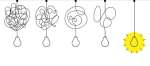
 Successful companies and their leaders don’t stand around waiting for direction in moments of potential crisis. With a highly developed sense of purpose, they take the initiative and problem solve with collective intelligence and effectiveness in a systems based approach to averting crisis and obtain optimal levels of sustained outcomes. This collective and collaborative approach to performance arises from a focus on upper brain response for achievement, rather than a lower brain response to self-preservation.
Teams focus on upper brain response for achievement are highly functional with a sense of clarity to operate at all times to the highest levels of emotional intelligence. Sounds like a pretty great organization does it not? Does it sound like the way you and your leaders and teams function in crisis? What it takes is an integrated leadership development model, decentralized power structure, and a systematic approach to driving performance to thrive, as opposed to simply solving problems and averting crisis to survive.
My colleague and mentor, Dr. Michael Frisina, quotes the former mayor of the city of Chicago, Rahm Emanuel, he says, “you never let a good crisis go to waste.” There is a resounding truth and critical flaw in this statement. Frequently today, the only time our large organizations truly learn to self-assess is in a moment of climatic catastrophe. Leadership teams are exposed to pain of outcomes predictable to reaction to crisis (surviving) rather than responding for achievement (thriving). While we do achieve a certain level of change from these crises, the problem is that the organization never truly improves to be resilient against all forms of calamity.
In today’s world, leaders must discover the root cause, become adaptable, and second-order problem solve to drive achievement. Leaders must move beyond the ‘crisis managing’ approach and learn to behave in ways to drive maximum performance. To truly transform, the leaders of these organizations have to elevate their behaviour and their thinking to what we call upper-brain performance capacity –
to evolve from crisis thinking to continual positive achievement thinking. In this attainable human attribute the maxim is this: it never matters what is happening to me but how I choose to respond to what is happening to me that predicts my level of performance.
So how does a leader go about creating such an organization that can take the beating of the daily grind, remain just as competitive, and ascertain repeatable high performance? The answer to this lies in this age-old truth – organizations do not do things, people do. Equipping your people with the skill of Positive Presence provides the performance leverage needed to keep brains healthy and performance excellence.